
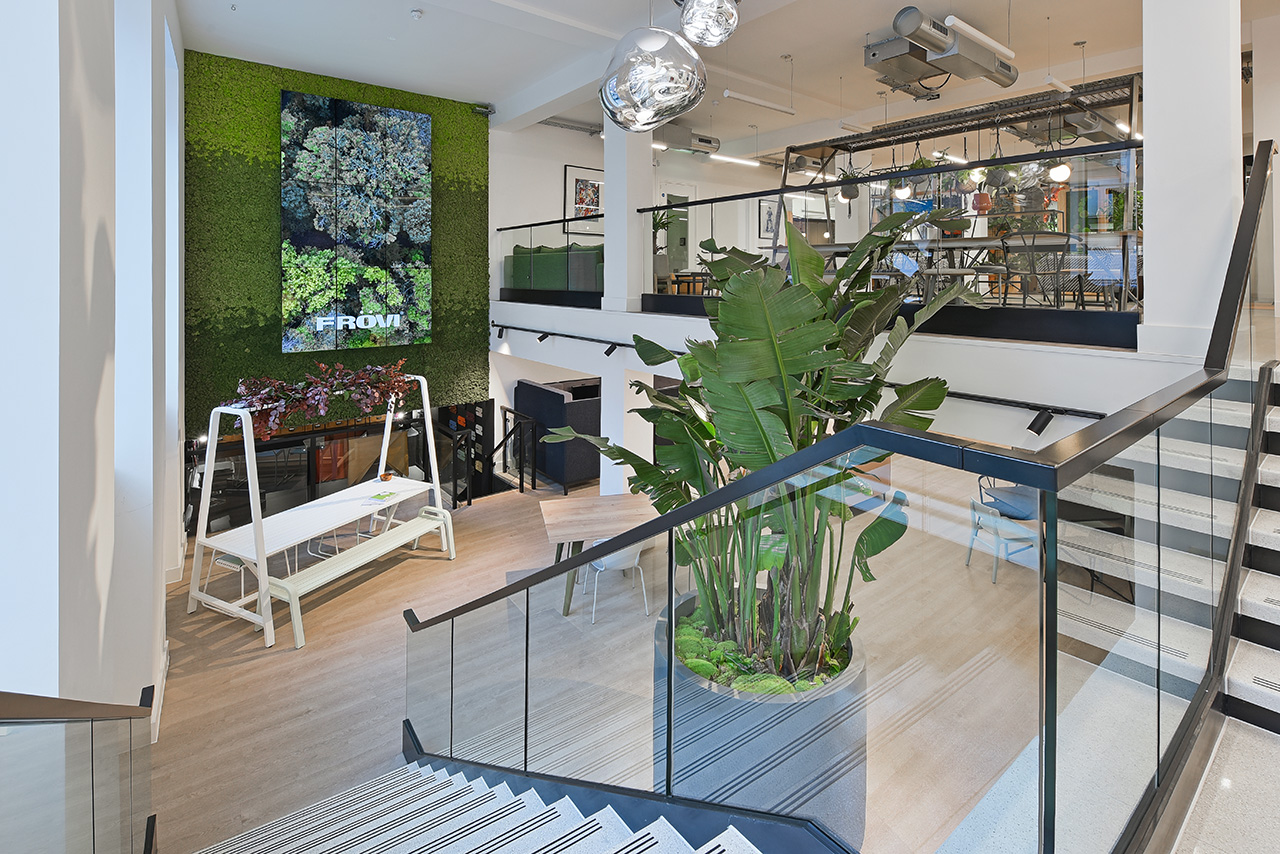
Biophilia Planting in Offices
Biophilic Design in Offices
The Green Revolution: Capturing the Power of Biophilic Design in the Office
For decades, the “corporate office” was synonymous with grey cubicles, fluorescent hums, and sterile corridors. But the tide has turned. Today, the most forward-thinking workspaces in London and beyond are embracing biophilic design—the practice of integrating nature into the built environment.
Over the years I have had the opportunity to document several projects where lush greenery and organic elements weren’t just “decorations” but were central to the architectural vision. My task was to capture how these living, breathing installations transform a workplace from a place of “to-do lists” into a sanctuary of wellbeing.
Why “Green” is the New Standard
Biophilic design is rooted in the idea that humans have an innate need to connect with nature. In a high-pressure office setting, this connection is vital. Whether it’s a floor-to-ceiling living moss wall, strategically placed Kentia palms, or cascading hanging gardens in a central atrium, these elements do more than just look good on camera.
Studies show that office planting improves air quality, reduces noise pollution, and significantly boosts employee productivity. From a photography perspective, these “green lungs” provide a stunning visual contrast to the hard angles of glass and steel, adding a layer of softness and vitality to the composition.
The Challenge: Photographing a “Living” Interior
Capturing plants in an office environment requires a delicate technical touch. Unlike a stationary desk or a light fixture, plants are organic and textured. Here’s how I approach these shoots:
- Colour Accuracy: Green is one of the hardest colours to get “right” in digital photography. If the white balance is off, a vibrant fern can look sickly and yellow. I use professional-grade colour calibration to ensure the foliage looks as lush and healthy in the photo as it does in person.
- Depth and Texture: I look for angles where the plants frame the architectural lines of the office. This creates “depth of field,” guiding the viewer’s eye through the space and making the office feel more expansive and three-dimensional.
- Lighting the Leaves: Natural light is the best friend of biophilia. I love capturing the way sunlight filters through leaves (the “dappled” effect), which creates a sense of calm and tranquility that a standard office light simply cannot replicate.
Showcasing Your Wellness Credentials
For developers, architects, and facilities managers, high-quality photography of biophilic installations is a powerful marketing asset. In a post-pandemic world, companies are competing to attract talent back into the office. A workspace that prioritizes wellness and mental health—visualised through stunning interior photos—is a major competitive advantage.
It proves to prospective tenants and employees that the company values more than just the bottom line; they value the human experience within the walls.
Final Thoughts
Documenting the shift toward greener offices has been one of the most refreshing parts of my recent work. There is something deeply satisfying about seeing a sleek, modern boardroom softened by the presence of nature. It’s a reminder that even in our most high-tech environments, we still crave a connection to the earth.
Is your office space leading the way in biophilic design? Don’t let your hard work go unnoticed. Professional interior photography is the best way to showcase the vibrancy and health of your workspace. Let’s discuss how I can help tell your brand’s “green” story.


